
Why Satellite TV Signals Fail During Solar Outages
It is that time of year again when the Sun / Solar Outage can affect the power of satellite signals your satellite dish is receiving, resulting in a loss of some of the more weaker UK TV channels.
This is information for people who may be experiencing this for the first time, and a nice reminder for those that have lived here before
The phenomenon, sometimes called a “sun outage” or “solar interference”, affects satellite television systems around the world and can briefly disrupt services carried on satellites including the Astra fleet used for UK television broadcasting at 28.2° East.
This occurrence happens in March and October for a couple of weeks every year, around the time of the Spring and Autumn equinox. In the northern hemisphere, sun outages occur before the March equinox (February, March) and after the September equinox (September and October).
Although the interruptions are usually short-lived, many viewers notice sudden picture breakup or complete signal loss during the solar outage period.
This “satellite solar outage” happens at around 10.30 – 11.30 am and can last for upto 20 minutes.
View a video of the solar outage occurring here
Do not panic, your temporary loss of signals will resolve itself and just start working again as soon as the sun moves out of the position
![solarout-300x90[1]](https://www.satandpcguy.com/wp-content/uploads/2016/02/solarout-300x901.bmp)


What Is a Solar Outage?
A solar outage occurs when the sun lines up directly behind a communications satellite from the viewer’s perspective on Earth.
Because the sun naturally produces enormous amounts of radio frequency energy, it overwhelms the relatively weak satellite signals being received by the satellite dish.
When this alignment happens, the satellite receiver struggles to separate the intended satellite signal from the background radio noise generated by the sun itself.
The result can include:
- Picture breakup
- Pixelation
- Audio loss
- “No Signal” warnings
- Complete temporary loss of channels
The effect usually lasts only a few minutes each day during the outage period.
Viewers in Spain Often Notice It More
UK satellite TV viewers in Spain and southern Europe sometimes notice solar outages more clearly because many UK satellite signals are already relatively weak outside Britain.
Modern Astra satellites use tightly focused UK spot beams designed mainly for reception inside the UK and Ireland.
In Spain, especially on smaller dishes, signal margins can already be limited.
This means even small amounts of additional solar interference can temporarily push the signal below usable levels.
Viewers may therefore experience:
- More severe picture breakup
- Longer interruptions
- Complete signal loss during the peak alignment period
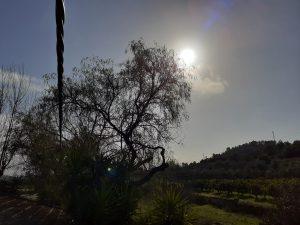
It is also a good time for a bit of housekeeping, as you can use this outage time to see if there are any trees and shrubs casting shadows onto the dish, which means they can be reducing and blocking the signals from the satellite to your dish.
This can also have an effect on satellite signals at night, as 12 hours after the solar outage, the satellites are totally in the earths shadow, and receive no solar energy, and so rely on weak battery power, which reduced the signal output of the satellites for a few minutes.
More information on this solar outage can be found here : https://www.satandpcguy.com/uk-tv-astra-satellites/satellite-solar-outage/
Comments
Why Satellite TV Signals Fail During Solar Outages — No Comments
HTML tags allowed in your comment: <a href="" title=""> <abbr title=""> <acronym title=""> <b> <blockquote cite=""> <cite> <code> <del datetime=""> <em> <i> <q cite=""> <s> <strike> <strong>